
Authorised Indian Distributor
Saxsons Group
New Delhi, India · Since 1997
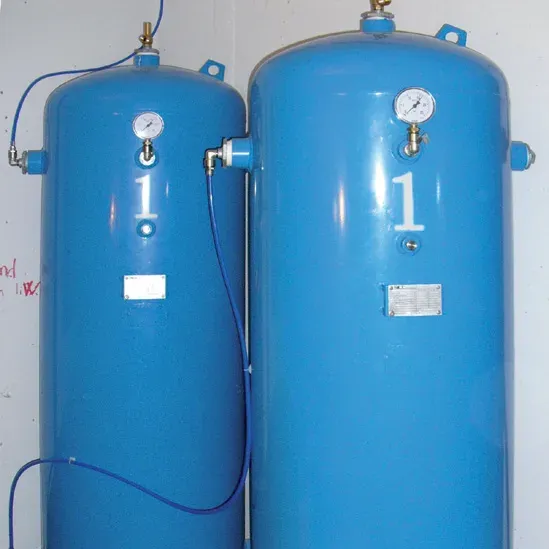
WGHS™ Waste Gas Handling SystemCyclotron Off-Gas Decay-and-Release
The facility-utility that turns radioactive synthesis off-gas from a radiation-safety problem into a routine, recorded process. Detects, isolates the hot cell, holds the gas until it has decayed, and releases it under audit.
Key Features
- Detects radioactive gases generated during cyclotron synthesis ((the manufacturer spec))
- Automatically isolates the host hot cell when off-gas radioactivity is detected ((the manufacturer spec))
- Delivers off-gas into storage tanks for decay ((the manufacturer spec))
- Releases the gas safely only after the radioactivity has decayed ((the manufacturer spec))
- Checks and records data for every waste cycle — per-cycle audit log ((the manufacturer spec))
All Features
- Detects radioactive gases generated during cyclotron synthesis ((the manufacturer spec))
- Automatically isolates the host hot cell when off-gas radioactivity is detected ((the manufacturer spec))
- Delivers off-gas into storage tanks for decay ((the manufacturer spec))
- Releases the gas safely only after the radioactivity has decayed ((the manufacturer spec))
- Checks and records data for every waste cycle — per-cycle audit log ((the manufacturer spec))
- Facility-level utility — pairs with SYNT synthesis hot cells in the radiopharmacy stack
- Closes the radiation-safety loop on cyclotron synthesis off-gas — no direct atmospheric release of live activity
- Sits inside the AERB Atomic Energy (Radiation Protection) Rules 2004 licensing framework for an Indian cyclotron site
- Available through Saxsons Group with full AERB import documentation
Technical Specifications
| Type | Radioactive gaseous-waste disposal system — facility-utility for cyclotron synthesis hot cells |
| Function — detection | Detects radioactive gases generated during cyclotron synthesis processes |
| Function — isolation | Automatically isolates the host hot cell on detection of off-gas radioactivity |
| Function — storage | Delivers off-gas into storage tanks for decay buffer |
| Function — release | Releases gas only after radioactivity has decayed to safe levels |
| Function — data | Checks and records data for every waste cycle (audit log) |
| Integration | Pairs with SYNT synthesis hot cells; related the manufacturer products include RES 1, RES 2, SYNTHERA HC |
| Storage tank capacity | Not published on (the manufacturer )public page — confirm via brochure |
| Gas-handling rate | Not published on (the manufacturer )public page — confirm via brochure |
| Monitoring instrumentation | Not published on (the manufacturer )public page — confirm via brochure |
| Indian regulatory path | AERB Atomic Energy (Radiation Protection) Rules 2004 + AERB Regulatory Requirements for Medical Cyclotron Facility (2017) |
Applications
Radiation safety on the off-gas side of the cyclotron radiopharmacy
Cyclotron-synthesis off-gas disposal
Synthesis processes generate radioactive gases — WGHS captures them at source, holds them for decay, and releases them after radioactivity has dropped to safe levels. No direct atmospheric release of live activity.
Hot-cell isolation on gas event
When off-gas radioactivity is detected, WGHS automatically isolates the host hot cell — limiting the release path and giving the operator a defined containment window for response.
Per-cycle audit log
Every waste cycle is checked and recorded. The decay-and-release log is an audit-trail input for the radiopharmacy programme — useful at AERB inspection and for internal radiation-safety review.
Pairs with SYNT and other (the manufacturer )hot cells
WGHS is part of the manufacturer-supplied cyclotron stack. Specified alongside SYNT (synthesis), it closes the radiation-safety loop that the synthesis cell opens. Related the manufacturer products: RES 1, RES 2, SYNTHERA HC.
AERB licensing input
For an Indian cyclotron site, off-gas handling is one of the inputs to the AERB Regulatory Requirements for Medical Cyclotron Facility licensing path. WGHS provides the engineered control that documentation needs to cite.
Facility-level utility
WGHS is not a per-cell accessory — it's a facility-utility that serves the synthesis-cell estate. One unit, multiple host cells covered.
Why WGHS?
The simplest answer to live radioactive off-gas is to wait. WGHS makes that wait into a controlled, recorded process: detect the gas, isolate the cell, store the gas, wait for decay, release after decay. Each step recorded for audit.
Every waste cycle generates a recorded data point — when the gas came in, when it decayed, when it was released. That is the audit trail an AERB inspection asks for, in a form the operator does not have to assemble manually.
WGHS serves the cyclotron synthesis-cell estate. One installation covers the off-gas safety story for the whole synthesis line — a smaller capital footprint than per-cell off-gas handling.
Catalogs & Resources
Manufacturer product page. Manufacturer brochure is gated — request via Saxsons for direct delivery.
WGHS™ Waste Gas Handling System
More for this product
Each card opens a focused post for a specific specialty — peer-reviewed evidence and clinical workflow, written for the persona you select.
FAQ
Cyclotron waste-gas handling — questions we hear from Indian cyclotron teams
What synthesis-reactor off-gas actually contains, how the detect-isolate-decay-release cycle works, sizing against your batch throughput, and what the per-cycle audit log solves at AERB inspection.
Q.What happens to the radioactive off-gas that comes off a cyclotron synthesis reactor?
F-18 chemistry produces volatile radioactive gases — trace [18F]-fluoride carried in helium purge, [11C]-methylation off-gas, [13N]-ammonia by-products. If these vent directly to the building exhaust, the stack releases activity into the ambient air around the facility. AERB Regulatory Requirements for Medical Cyclotron Facility require a decay-and-release chain: capture the off-gas, hold it long enough for the short-lived isotope to decay to background, then release. Uncontrolled venting is not compliant.
Q.How does WGHS handle the detect–isolate–store–decay–release cycle?
WGHS is a facility-utility off-gas handler that sits between the synthesis hot cell and the building exhaust. It detects activity in the incoming purge line, isolates the active gas into a shielded decay tank, holds it for a configurable dwell time (typically 10 half-lives for F-18, which is around 18 hours), verifies activity has dropped to background, and only then releases the decayed gas to the exhaust. Every cycle is logged for the AERB inspection dossier.
Q.Does WGHS need to be sized against my synthesis throughput?
Yes. Sizing depends on peak F-18 batch activity and the number of batches per production day. A single-batch FDG production site needs a smaller decay tank than a multi-batch multi-tracer site running FDG + FMISO + FLT in the same day. Saxsons sizes the tank capacity and shielding tier against your synthesis programme at quote — under-sized capacity forces batch queueing.
Q.What does the per-cycle audit log solve at AERB inspection time?
AERB inspection reads the discharge record — when the gas came in, what activity it had, how long it was held, what activity it read at release. WGHS records every cycle automatically; the operator does not compile the log reactively when the inspector arrives. That is a documented engineered-control chain the AERB inspector can verify by opening the WGHS log rather than by interviewing the operator.
Q.How is WGHS supplied and installed in India?
WGHS is distributed by Saxsons Group. Supply covers the off-gas handler, decay tank sizing, shielding, integration with SYNT and other synthesis cells on site, and the AERB Regulatory Requirements for Medical Cyclotron Facility documentation dossier. Saxsons handles the CDSCO medical-device import registration and installation across the Indian cyclotron network.
WGHS Waste Gas Handling System supplier in India — Saxsons Group
Saxsons Group has supplied cyclotron equipment to over 1,000 Indian hospitals since 1988. Every consignment of WGHS Waste Gas Handling System ships with cold-chain logistics, AERB import documentation, CDSCO registration references and a Certificate of Analysis delivered before dispatch — the paperwork your radiation-safety and procurement teams need, pre-assembled.
- Nationwide delivery footprint — every metro and tier-2 city in India, scheduled to your treatment / procedure calendar.
- AERB & CDSCO documentation — import licence, radiation-safety paperwork and RSO briefing pre-assembled for the audit file.
- 40+ years in Indian oncology — long-standing supply relationships with AIIMS, Tata Memorial, and hundreds of tertiary-care centres.
- Single point of accountability — one purchase order, one delivery contact, one after-sales team across the whole product family.
Also supplied by Saxsons Group across India
Close the radiation-safety loop on your cyclotron synthesis off-gas
Contact Saxsons Group for pricing, SYNT + WGHS package quotes, demo arrangement, AERB import documentation and installation support for the WGHS waste gas handling system.